Celebrated CUNY philosopher Massimo Pigliucci investigates the practical applications of Cicero’s skepticism, weaving together ancient wisdom, personal narrative, and practical insights to help readers find meaning through doubt

You may have picked up this book because you’re searching for a philosophy of life. Beware that it is dangerous to accept a philosophical or religious practice without questioning it. Ancient Greek and Roman philosophers believed that, without a healthy amount of doubt, you could be tricked into thinking you have found the ultimate Truth—and the danger of absolute faith is no less threatening today.

In How to Be a (Happy) Skeptic, philosopher Massimo Pigliucci reveals the way to a meaningful, happy life through the power of curiosity and doubt with the ancient Roman public advocate, orator, statesman, and thinker Marcus Tullius Cicero as his guide. Cicero lived in turbulent times at the end of the Roman Republic. Though he mostly lived as a Stoic, Cicero also followed Plato’s Skeptical Academy, believing a spirit of inquiry and an open-minded attitude were the secrets to living well.

Weaving Cicero’s biography with deep investigations of his published works, Pigliucci explores the foundations for a good life: from how to formulate our values to how to nurture friendships; from being a good citizen and fighting for social justice to handling grief, pain, and even death. Taking a page from Cicero’s book, we, too, can adopt a practical philosophy of reason and common sense.
How to Be a (Happy) Skeptic is the book we’ve been waiting for! If you’ve ever recoiled from Stoicism as too austere, this book offers a sensible, socially responsible middle ground to living the life you want. What’s more, it is the single best guide now available to the rich body of practical wisdom written by Marcus Tullius Cicero.”
Michael Fontaine, author of How to Have Willpower

How to Be a (Happy) Skeptic combines intellectual biography with self-help writing of the best kind, showing us how curiosity and doubt—not certainty, or faith—can be foundational for a rich, fulfilling life.”
M. D. Usher, author of Following Nature’s Lead: Ancient Ways of Living in a Dying World

“This book is a wide-ranging introduction to ancient Greco-Roman ethics and a swift history of Cicero’s life and times. More importantly, it’s a compelling guide to living well—to thinking reasonably, to savoring friendship, to building a better society, and to facing suffering with dignity and grace.”
Scott Samuelson, author of Rome as a Guide to the Good Life: A Philosophical Grand Tour

“To his talents as a natural writer, expert historian of philosophy, and committed practical ethicist, Massimo Pigliucci here adds the skills of a gifted biographer. His deft interweaving of Cicero's life with an inquiry into how to best live our own makes this book a compelling and spiritually uplifting achievement.”
James Romm, author of Dying Every Day: Seneca at the Court of Nero

“Massimo Pigliucci strikes again. No one is better at illuminating the therapeutic power of the history of philosophy, or at showing its continued relevance for knowing what it means to have a life worth living.”
Robin Reames, author of The Ancient Art of Thinking for Yourself

“With the help of Pigliucci’s expert guidance, readers will learn everything there is to know about [Cicero,] one of the most influential figures in Western philosophy, and in the process, they will be rewarded with a renewed understanding of themselves and the world around them.”
Vittorio Bufacchi, author of Why Cicero Matters

“A lively and engaging guide to ancient theories on topics that remain essential in the modern world, such as ethics, friendship, happiness, and the meaning of life. Drawing from the most important thinkers from Greece and Rome, Pigliucci weaves a wide variety of philosophical ideas into a clearly drawn roadmap for living well.”
Jeffrey Beneker, author of How to Listen: An Ancient Guide to Learning from Others

“Massimo Pigliucci has written a highly original and hopeful book about the philosophical ideas of Cicero. In a disarmingly personal style he makes a convincing case for why all of us would do well to think and live more like Cicero today, offering the reader hands on advice on how to do so along the way. A thoroughly enjoyable read!”
Inger N. I. Kuin, author of Diogenes: The Rebellious Life and Revolutionary Philosophy of the Original Cynic

“Massimo Pigliucci came to Cicero through a divorce, a midlife crisis, and a long tour through different philosophical doctrines. In reading the works of the Roman orator he found a philosophy that takes doubt seriously and treats uncertainty as a starting point rather than a problem. . . . Pigliucci's accessible readings make him a reliable and eloquent guide for anyone thinking seriously about how to live.”
Armand D'Angour, author of How to Talk About Love: An Ancient Guide for Modern Lovers

“Pigliucci, the master of bringing ancient wisdom to modern times, does it again, telling how Cicero wielded a wise form of skepticism in pursuit of justice amid rising dictatorship.”
Barry Lam, author of Fewer Rules, Better People: The Case for Discretion

Massimo Pigliucci is an author, blogger, and podcaster, as well as the K. D. Irani Professor of Philosophy at the City College of New York. His academic work is in evolutionary biology, philosophy of science, the nature of pseudoscience, and practical philosophy. His books include the bestselling How to Be a Stoic: Using Ancient Philosophy to Live a Modern Life (Basic Books, 2017) and Beyond Stoicism—A Guide to the Good Life with Stoics, Skeptics, Epicureans, and Other Ancient Philosophers (with Gregory Lopez and Meredith Kunz, The Experiment, 2025). He has been published in the New York Times, the Wall Street Journal, and Big Think, among others. He lives in New York City. View titles by Massimo Pigliucci

About

Celebrated CUNY philosopher Massimo Pigliucci investigates the practical applications of Cicero’s skepticism, weaving together ancient wisdom, personal narrative, and practical insights to help readers find meaning through doubt

You may have picked up this book because you’re searching for a philosophy of life. Beware that it is dangerous to accept a philosophical or religious practice without questioning it. Ancient Greek and Roman philosophers believed that, without a healthy amount of doubt, you could be tricked into thinking you have found the ultimate Truth—and the danger of absolute faith is no less threatening today.

In How to Be a (Happy) Skeptic, philosopher Massimo Pigliucci reveals the way to a meaningful, happy life through the power of curiosity and doubt with the ancient Roman public advocate, orator, statesman, and thinker Marcus Tullius Cicero as his guide. Cicero lived in turbulent times at the end of the Roman Republic. Though he mostly lived as a Stoic, Cicero also followed Plato’s Skeptical Academy, believing a spirit of inquiry and an open-minded attitude were the secrets to living well.

Weaving Cicero’s biography with deep investigations of his published works, Pigliucci explores the foundations for a good life: from how to formulate our values to how to nurture friendships; from being a good citizen and fighting for social justice to handling grief, pain, and even death. Taking a page from Cicero’s book, we, too, can adopt a practical philosophy of reason and common sense.

Praise

How to Be a (Happy) Skeptic is the book we’ve been waiting for! If you’ve ever recoiled from Stoicism as too austere, this book offers a sensible, socially responsible middle ground to living the life you want. What’s more, it is the single best guide now available to the rich body of practical wisdom written by Marcus Tullius Cicero.”
Michael Fontaine, author of How to Have Willpower

How to Be a (Happy) Skeptic combines intellectual biography with self-help writing of the best kind, showing us how curiosity and doubt—not certainty, or faith—can be foundational for a rich, fulfilling life.”
M. D. Usher, author of Following Nature’s Lead: Ancient Ways of Living in a Dying World

“This book is a wide-ranging introduction to ancient Greco-Roman ethics and a swift history of Cicero’s life and times. More importantly, it’s a compelling guide to living well—to thinking reasonably, to savoring friendship, to building a better society, and to facing suffering with dignity and grace.”
Scott Samuelson, author of Rome as a Guide to the Good Life: A Philosophical Grand Tour

“To his talents as a natural writer, expert historian of philosophy, and committed practical ethicist, Massimo Pigliucci here adds the skills of a gifted biographer. His deft interweaving of Cicero's life with an inquiry into how to best live our own makes this book a compelling and spiritually uplifting achievement.”
James Romm, author of Dying Every Day: Seneca at the Court of Nero

“Massimo Pigliucci strikes again. No one is better at illuminating the therapeutic power of the history of philosophy, or at showing its continued relevance for knowing what it means to have a life worth living.”
Robin Reames, author of The Ancient Art of Thinking for Yourself

“With the help of Pigliucci’s expert guidance, readers will learn everything there is to know about [Cicero,] one of the most influential figures in Western philosophy, and in the process, they will be rewarded with a renewed understanding of themselves and the world around them.”
Vittorio Bufacchi, author of Why Cicero Matters

“A lively and engaging guide to ancient theories on topics that remain essential in the modern world, such as ethics, friendship, happiness, and the meaning of life. Drawing from the most important thinkers from Greece and Rome, Pigliucci weaves a wide variety of philosophical ideas into a clearly drawn roadmap for living well.”
Jeffrey Beneker, author of How to Listen: An Ancient Guide to Learning from Others

“Massimo Pigliucci has written a highly original and hopeful book about the philosophical ideas of Cicero. In a disarmingly personal style he makes a convincing case for why all of us would do well to think and live more like Cicero today, offering the reader hands on advice on how to do so along the way. A thoroughly enjoyable read!”
Inger N. I. Kuin, author of Diogenes: The Rebellious Life and Revolutionary Philosophy of the Original Cynic

“Massimo Pigliucci came to Cicero through a divorce, a midlife crisis, and a long tour through different philosophical doctrines. In reading the works of the Roman orator he found a philosophy that takes doubt seriously and treats uncertainty as a starting point rather than a problem. . . . Pigliucci's accessible readings make him a reliable and eloquent guide for anyone thinking seriously about how to live.”
Armand D'Angour, author of How to Talk About Love: An Ancient Guide for Modern Lovers

“Pigliucci, the master of bringing ancient wisdom to modern times, does it again, telling how Cicero wielded a wise form of skepticism in pursuit of justice amid rising dictatorship.”
Barry Lam, author of Fewer Rules, Better People: The Case for Discretion

Author

Massimo Pigliucci is an author, blogger, and podcaster, as well as the K. D. Irani Professor of Philosophy at the City College of New York. His academic work is in evolutionary biology, philosophy of science, the nature of pseudoscience, and practical philosophy. His books include the bestselling How to Be a Stoic: Using Ancient Philosophy to Live a Modern Life (Basic Books, 2017) and Beyond Stoicism—A Guide to the Good Life with Stoics, Skeptics, Epicureans, and Other Ancient Philosophers (with Gregory Lopez and Meredith Kunz, The Experiment, 2025). He has been published in the New York Times, the Wall Street Journal, and Big Think, among others. He lives in New York City. View titles by Massimo Pigliucci

Videos from the 2026 First-Year Experience® Conference are now available

We’re pleased to share videos from the 2026 First-Year Experience® Conference. Whether you weren’t able to join us at the conference or would simply like to hear the talks again, please take a moment to view the clips below.   Penguin Random House Author Breakfast Monday, February 17th, 7:15 – 8:45 am PST   This

Read more

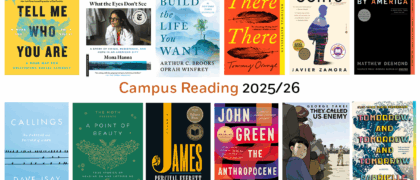
What Students Will Be Reading: Campus Common Reading Roundup, 2025-26

With the fall semester in full swing, colleges and universities around the country have announced their Common Reading books for the upcoming 2025-26 academic year. We’ve compiled a list of over 291 programs and their title selections from publicly available sources, which you can download here: First-Year Reading 2025-26. We will continue to update this

Read more

2026 Catalog for First-Year & Common Reading

We are delighted to present our new First-Year & Common Reading Catalog for 2026! From award-winning fiction, poetry, memoir, and biography to new books about the environment, current events, history, public health, science, social justice, student success, and technology, the titles presented in our common reading catalog will have students not only eagerly flipping through

Read more