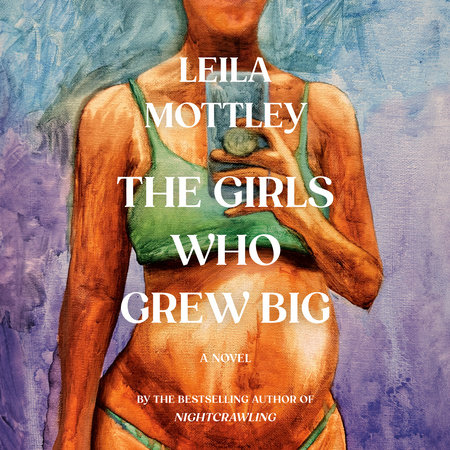
Download high-resolution image
Listen to a clip from the audiobook
audio pause button
0:00
0:00

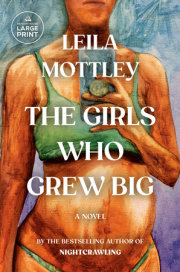
The Girls Who Grew Big

A Novel

Listen to a clip from the audiobook
audio pause button
0:00
0:00
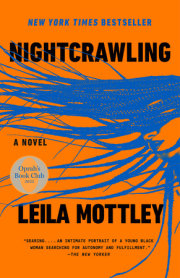
From the author of Oprah's Book Club pick and New York Times bestseller Nightcrawling, here is an astonishing new novel about the joys and entanglements of a fierce group of teenage mothers in a small town on the Florida panhandle.

Adela Woods is sixteen years old and pregnant. Her parents banish her from her comfortable upbringing in Indiana to her grandmother’s home in the small town of Padua Beach, Florida. When she arrives, Adela meets Emory, who brings her newborn to high school, determined to graduate despite the odds; Simone, mother of four-year-old twins, who weighs her options when she finds herself pregnant again; and the rest of the Girls, a group of outcast young moms who raise their growing brood in the back of Simone’s red truck.

The town thinks the Girls have lost their way, but really they are finding it: looking for love, making and breaking friendships, and navigating the miracle of motherhood and the paradox of girlhood.

Full of heart and life and hope, set against the shifting sands of these friends’ secrets and betrayals, The Girls Who Grew Big confirms Leila Mottley’s promise and offers an explosive new perspective on what it means to be a young woman.
Simone

Nobody ever warns you about the placenta. Like, you spend days seizing and stretching open to get some shoulders out your coochie and then the baby, or babies in my case, are writhing in your arms, and you realize it’s not even over. You’ve still gotta push out this pulsing purple heart bigger than your man’s head—and my man had a big-ass head—and find a way to cut the cords.

I guess if you’re in the hospital, then maybe somebody hands you a fancy pair of scissors to cut them or mentions the placenta in between the choke of contractions to get that second baby out, but I gave birth set up in the bed of my boyfriend’s red pickup truck, so I wouldn’t know. I’d tell you I did it that way ’cause I couldn’t afford the hospital without no insurance, which was true, but really I just didn’t want people looking at me funny like, girl what are you doing having a baby with this gangly man who keeps telling us to call him Tooth? I knew how it looked. I was sixteen. He was twenty-two.

But really, at the time, I didn’t think it mattered any more than the birthmark on my ankle and so I didn’t wanna have to explain to some nurse as I chewed ice that I love him, have to say, They my babies, I wanted them, I want them, even though at that point I don’t think I knew what I wanted or who I loved or how I ended up in the back of a pickup truck in Florida giving birth at thirty-six weeks.

At least in the truck, no questions was asked. Except, why didn’t nobody tell me about the placenta? I thought it would come out with the rest of that fluid, but nope, I had to do all the work while Tooth just stared at me, repulsed.

The twins was still attached to the fleshy heat of my body, slippery and smaller than one of his shoes, and I’d passed them to Tooth when I felt the faint cramps begin and knew I had to push one more time, maybe twice ’cause I’d been told there was two placentas up in there. But now Tooth was tryna give the babies back like they wasn’t half him, holding them out to me like grocery bags with the handles torn off.

“Should we go to the hospital?” Tooth asked, trying not to look between my thighs even though I saw his eyes drift there and shoot back up, his lashes fluttering in disgust.

I didn’t respond, mid-push, and then one soft big placenta slipped right out, two cords dangling from it, and I glared up at Tooth. “You think after all that, I’m about to go to the hospital now? No.”

I didn’t care none about the mess or the fact we ain’t known what we was doing, ’cause all those months of torment—when I’d been stretched out like an old sock by a big foot, expelled from the only family I’d known, whispered about among the throngs of a town high on contempt—was suddenly worth something. My babies.

I was exhausted, but I knew I couldn’t rest yet. “We have to cut the cords.”

“I think I got my pocketknife,” Tooth said.

He reached into his back pocket and pulled out the dirtiest pocketknife you’d ever seen, popped the blade and it was all crusted in dried brown blood, shed fur from some long-dead animal, and Lord knows how many fishes’ yellowed intestines.

“Where do I cut it?” he asked.

I looked at him. He stared back.

“Are you fucking with me? You can’t cut ’em with that,” I said.

“Why?”

I gawked. “It’s dirty.”

“So is that thing,” he said, nodding to my placenta.

“That thing fed your children for nine months. I’m not cuttin’ nothing with that.”

“Then what you gonna do?”

I looked around again, like I was gonna find some spare scissors among the pooling fluid, and then I looked back at the placenta, and I knew. This was the moment I became a mother, when I was the only person in the world that knew what needed to be done to keep my babies safe, to excavate myself just to feed them.

“I’ll bite it,” I said.

Tooth’s face twisted up like I’d just said I was gonna eat my own shit. “The fuck you talkin’ ’bout? I’ll go find another knife, just stay here and—”

Before he could do nothing, I had one cord in my mouth and I was gnawing. It didn’t take much work before my teeth found each other and then I tied it and moved to the next cord and my teeth ripped through that too. I expected them to be chewy, dense, but they felt like nothing but pasta before it’s cooked through. And then it was done, both cords severed.

The babies now fed on breast and body, each of their little mouths searching my skin for nipple. My girl found it first, and she was lucky ’cause my right breast had been leaking for days and was ready for her, far more full than the left one, so when she latched, the yellowish liquid came out thick and spilled right into her mouth. My boy kept searching but he was stuck around my heart, and he turned his head and opened his mouth wide and let out a roar. With a new fever, he continued until he found his life source and I helped get it in his small mouth.

I gazed down at my children, amazed, both of them latched to my titties and feeding, then I turned to look at my now-cut cords, still and white, and finally back to Tooth. I was grinning. His mouth was warped with loathing but I didn’t care none. I shoved him with my foot.

“Look! They so perfect. Ain’t they so perfect?”

He tilted his head, tried to shake the repulsion from his face, pocketknife still in hand, and sighed. “Yeah. They perfect.”

◆ ◆ ◆

To tell you the truth, I didn’t know much of nothing back then, sitting in that pickup truck staring at my placenta. How could I? Not ’cause I was young, but ’cause I was new. Like my newborn babies, skin so soft it seemed like they could tear open at any moment, I was just a fragile thing in a sharp world, like every other girl is before they meet themselves, before they meet their child and know what it means to give.

I already know y’all will take any chance you get to say we don’t know what we talking about, I’ve seen all the Teen Mom shows, but that’s not what I’m saying. All those shows get made just to give y’all some white girls to laugh at, pity, and say they should’ve known better, but really maybe you should’ve known better than to believe a camera is a mirror or an ocean is a pool or a mother is anything but a mother. You won’t know till you know, and now I do.

So that’s gonna make it even harder for you to understand why, four and a half years after I gave birth in the back of a pickup truck, I found myself squatting in the ocean pissing on another stick.

I’ll put it this way: teen moms, like Florida, are the country’s favorite scapegoat. Your favorite niece got addicted to fentanyl and is living with her boyfriend’s grandpa? At least she’s not a teen mom. You got laid off and have to move back to your parent’s house in Colorado? At least it’s not the hellhole they call Florida. Your daughter’s a lesbian? But she’s not pregnant! Got hate-crimed? But it’d be worse in Florida!

I’m from Florida and I was sixteen when I had my kids, so take it from me, it’s not a golden walk down a yellow brick road or nothing. But we don’t exist to calm your woes that at least your shitty life could be shittier. I love my kids. I spend my days rolled out in the sun in a little town called Padua Beach and I wouldn’t have it no other way. Or maybe I would, but wouldn’t we all? Grass is always greener. Ocean looks so much bluer from far away.

They say that in Florida, you go north and you get South, the Panhandle being the most South you could get in the Sunshine State. Padua Beach being one of those towns on the Panhandle coast nobody bothers to stop in on their way to the only thing that warrants a trip down to Florida: spring break and retirement.

Us Girls didn’t think about ourselves like that, though.

Sure, our accents slung themselves into the room ’fore we even made it through the door and we ain’t needed more than one trash bag to stuff all the clothes we owned in, but that wasn’t all we was. We was more than South, more than Florida, more than sea. Don’t be foolish, thinkin’ Padua Beach was just some coastal blip on the way somewhere bigger and better. We big on our own. And the Girls and me only made it bigger.

The Girls began the way all things do: in the seething foam of a wave spitting us to shore. Me first, then each of the Girls following. One after the other, cast off by the venom of a town built on y’all being good now? and babies havin’ babies, said in the rasp of a loud whisper and one polite little shake of the head. We found each other from our singular aloneness, made family out of a truck bed and the milky delight of watching our babies grow through the fog of distant shame.

I wasn’t the first one, that’s for sure. Young girls been having babies as long as there was babies to have. Meaning, forever. Not even a hundred years ago, nobody woulda batted an eye at me and my children, but things had changed. Somewhere along the walk of history, somebody decided we was a transgression to all things good and pure, and ever since then, despite the fact there’s less of us now than there was a decade ago, politicians and pastors and regular folk always talkin’ ’bout preventing teen pregnancy and poverty and sin, all in the same boastful breath. As though that’s all we was. As though the pace our skin stretched and spotted defined our motherhood.

But before we were an us, before we merged into one glorious sea, we were just our own sad drops of water in a cavernous basin of thirst. And I was the very first pellet of water, or at least that’s how it felt.

What the town would inevitably call a gang of teen moms who lost our way started as the day I needed to wash my panties. I won’t go into detail or nothing, I’m still my momma’s daughter after all, but those first six months of motherhood had turned my coochie into a swampland. I grew up in a house on top of some cinder blocks most people would call a trailer so I was used to cleaning some clothes without a washer or dryer.

All I had now was the dune lake. It was a miracle, the way stream and sea connected in one big crater of water. Mostly fresh water until some storm came along and rearranged its molecules with the flood, but the lake knew how to clean itself, emptied out into the Gulf and welcomed us back, to splash and fish and fling into her shallows.

I drove out to the dune lake on a Sunday morning, thinking most folks would be at church, and parked the truck a few feet from where the cypress tree bowed to the ground, worshipping the earth it came from. The babies slept on a blanket in the truck bed, face-to-face, while I crouched in the lake washing all their clothes and burp cloths.

Once the twins’ clothes was hung up to dry, I switched to washing my panties. I was tryna get a stain outta my only white pair of panties, the rest already on the clothesline, when I felt the familiar quake of footsteps. I turned, ready to grab the babies and start the engine going, leave my clothes there if I had to, but instead of a ranger or a man, it was a girl.

I knew her. I knew everyone in this town. Lucille Calder. She was still wearing her church clothes, her dress just past her knees, her shoes flat as the Florida terrain.

I could tell she was hesitant to get any closer to me. With what she’d prob’ly heard about me, I couldn’t blame her. I was an example of who she shouldn’t become, and any girl who had some sense would run at the sight of me.

I pulled out my phone and saw the time. “Service ain’t even over.”

Lucille glanced out at the water and that’s when I saw she’d been crying.

“Can . . . Can I tell you a secret?” she whimpered.

This is how all family’s created. Confession. A yearning to release. Somewhere to place your shame and have it wrapped up, coddled, and cradled like an infant who don’t have words yet to explain all the ways the world haunts them.

“You seen my panties, so can’t be much worse than that.” We both laughed. A Padua Beach lady could show her swimsuit bottoms, ass cheeks rippling and all, but the minute you get a flash of a polka-dot granny panty, she might as well be a whore.

Lucille took a breath. “I’m pregnant.”

Those words would become so familiar to me they sounded like church bells echoing inside me long after they stopped ringing. Lucille was the first in a long line of Girls to join me, shaming the town for shaming us with nothing but our smiles and our shimmies.

They’d all go back and forth, spending nights with parents, boyfriends, cousins, and then in the back of my red truck, where we all found solace, took turns holding each other’s children, and washed our panties together under the crude sun that loved us. I taught them how to rid a child of gas, how to fish a pebble from their mouths, how to cure mastitis. They taught me family could be something tender and loud and boundless.

This was how the Girls began.

Now, at almost twenty-one (I’d be counting down the days, ’cept nobody cards here), we’d cycled through over fifteen Girls. That August before everything changed, it was me, Emory, Tori, Crystal, April, and Jamilah. I liked these ones, ’specially Crystal ’cause she was older and had some more sense than the rest of them. And, of course, Emory, being my little brother’s new baby mama, was family.
“Blistering, wise, empathetic. . . . Mottley writes with unabashed reverence for these young mothers, never sanitizing or romanticizing their lives but instead valuing them on the page in all the ways they are not valued in their lives. . . . Mottley has brought the physicality and pain and beauty of birth and new motherhood into the light. That she has done so by way of teenage girls who have too often been shamed and shunned and told to hide themselves away makes her novel all the more vital to behold.” Nina LaCour, New York Times Book Review

“A brilliant novel.” Clare Mulroy, USA Today

“This striking novel tracks the friendships among a group of teen moms as they struggle and strive in a small, gossipy beach town in Florida’s sticky-hot panhandle.” —The New Yorker

“Mottley’s tough, vital lyricism drives a fiercely compassionate novel about survival, hope, and love. . . . Her ample talent is on display again.” Stephanie Cross, Daily Mail (U.K.)

Mottley is a dazzling writer and this novel opens up the world of young mothers in all its makeshift, sticky, struggling glory. The Girls Who Grew Big is sensuous, gripping, and utterly believable.” —Emma Donoghue, author of Room

“Raw, wild, and achingly beautiful, The Girls Who Grew Big is one of the most spiritually accurate and electric portrayals of motherhood I’ve ever read. Leila Mottley is the real deal.” Rufi Thorpe, author of Margo’s Got Money Troubles

"The Girls Who Grew Big is a novel about teen pregnancy that brilliantly upends every reductive trope and platitude on the subject. With impeccable and breathtaking prose, Mottley takes us into the treacherous terrain where girlhood and womanhood collide, and where families and friendships fracture, and the lines between them blur. Simone, Adela, Emory and The Girls live out loud and are flawed, tender, and absolutely unforgettable. Mottley continues to show us the power and beauty of her pen!”—Deesha Philyaw, author of The Secret Lives of Church Ladies

“Written in big, beautiful prose that expands throughout the novel and leaves the reader full and satisfied. . . . Leila Mottley’s grasp of human nature is unmatched.” Candice Carty-Williams, author of Queenie

“This broken world is lucky to have Leila Mottley writing in it. Like Jesmyn Ward, Kiese Laymon and Toni Cade Bambara before her, Mottley digs deep into the parts of America that many tell us to forget. In gorgeous prose, she brings to life the beauty and brutality of the Florida panhandle, and turns narratives about motherhood, girlhood and the South on their heads. Mottley is the real deal—a vital voice in the American literary tapestry, giving us a full, empathetic understanding of the parts of life the rest of culture tells us to ignore.” —Kaitlyn Greenidge, author of Libertie

“Compelling and uplifting. . . . Mottley is an elegant and expressive writer, giving each of her unforgettable characters a fullness and relatability that will appeal to many readers. . . . Give to fans of Brit Bennett’s The Mothers and Kirstin Valdez Quade’s The Five Wounds. . . . Stirring.” Allison Escoto, Booklist (starred)

“Propulsive. . . . Poignant without being saccharine, thanks to the sharply drawn characters and their all-too-human behavior. This distinctive coming-of-age story is worth seeking out.” —Publishers Weekly

“A sensual set of character studies, shaped by compassion and defiance.” —Kirkus Reviews

“A poignant and deeply engaging exploration of teenage motherhood. . . . Through evocative storytelling and a vivid sense of place, this book paints an unforgettable portrait of resilience, self-discovery, and the power of forging one’s path against the odds. . . . Authentic and emotionally compelling.” Jessica Calaway, Library Journal (starred)

The Girls Who Grew Big took me back to a time in my body I thought I had long forgotten. . . . Should be a cult classic.” —Terry McMillan, ELLE

“Exquisite. . . . Brilliant. . . . Both hopeful and determinedly honest, The Girls Who Grew Big reflects on how and why we love.” Sydney Harkin, BookPage (starred)

“A stunning and layered story that evades clichés and empathetically portrays the struggles and joys of motherhood, growing up and female friendship.” Abigail Charak, Deep South Magazine

“A bold, empathetic, and unforgettable novel. . . . Mottley captures with extraordinary sensitivity the paradox at the heart of her characters’ lives: the struggle to nurture others while still learning who they are. [The girls’] moments of laughter, desire, betrayal, and loyalty shimmer with life.” Kaitlin Jefferys, Voice Magazine

“Outstanding. . . . Each young woman [is] awesomely unique and interesting. . . . With Mottley’s remarkable linguistic ability, pitch-perfect dialogue and impressive characterizations, the Girls refuse to be forgotten. . . . With wit and electric zeal, the book is powered on everything stereotyped about such girls and pushes those labels off a building without a parachute. The Girls Who Grew Big will take a vaulted place on your bookshelf for the rest of your days. Even on a second read, you will find it hard to put down.” Jana Siciliano, BookReporter

“Refreshing. . . . Poignant. . . . Reinvent[s] how motherhood is portrayed in literature. . . . How lucky we are to have Mottley’s clear-sighted writing.” Ellen Peirson-Hagger, i news (U.K.)
© Courtesy of the Author
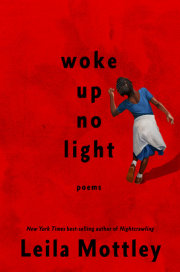
LEILA MOTTLEY is the author of the novel Nightcrawling, an Oprah’s Book Club pick and New York Times bestseller, and the poetry collection woke up no light. She is also the 2018 Oakland Youth Poet Laureate. She was born and raised in Oakland, where she continues to live. View titles by Leila Mottley

About

From the author of Oprah's Book Club pick and New York Times bestseller Nightcrawling, here is an astonishing new novel about the joys and entanglements of a fierce group of teenage mothers in a small town on the Florida panhandle.

Adela Woods is sixteen years old and pregnant. Her parents banish her from her comfortable upbringing in Indiana to her grandmother’s home in the small town of Padua Beach, Florida. When she arrives, Adela meets Emory, who brings her newborn to high school, determined to graduate despite the odds; Simone, mother of four-year-old twins, who weighs her options when she finds herself pregnant again; and the rest of the Girls, a group of outcast young moms who raise their growing brood in the back of Simone’s red truck.

The town thinks the Girls have lost their way, but really they are finding it: looking for love, making and breaking friendships, and navigating the miracle of motherhood and the paradox of girlhood.

Full of heart and life and hope, set against the shifting sands of these friends’ secrets and betrayals, The Girls Who Grew Big confirms Leila Mottley’s promise and offers an explosive new perspective on what it means to be a young woman.

Excerpt

Simone

Nobody ever warns you about the placenta. Like, you spend days seizing and stretching open to get some shoulders out your coochie and then the baby, or babies in my case, are writhing in your arms, and you realize it’s not even over. You’ve still gotta push out this pulsing purple heart bigger than your man’s head—and my man had a big-ass head—and find a way to cut the cords.

I guess if you’re in the hospital, then maybe somebody hands you a fancy pair of scissors to cut them or mentions the placenta in between the choke of contractions to get that second baby out, but I gave birth set up in the bed of my boyfriend’s red pickup truck, so I wouldn’t know. I’d tell you I did it that way ’cause I couldn’t afford the hospital without no insurance, which was true, but really I just didn’t want people looking at me funny like, girl what are you doing having a baby with this gangly man who keeps telling us to call him Tooth? I knew how it looked. I was sixteen. He was twenty-two.

But really, at the time, I didn’t think it mattered any more than the birthmark on my ankle and so I didn’t wanna have to explain to some nurse as I chewed ice that I love him, have to say, They my babies, I wanted them, I want them, even though at that point I don’t think I knew what I wanted or who I loved or how I ended up in the back of a pickup truck in Florida giving birth at thirty-six weeks.

At least in the truck, no questions was asked. Except, why didn’t nobody tell me about the placenta? I thought it would come out with the rest of that fluid, but nope, I had to do all the work while Tooth just stared at me, repulsed.

The twins was still attached to the fleshy heat of my body, slippery and smaller than one of his shoes, and I’d passed them to Tooth when I felt the faint cramps begin and knew I had to push one more time, maybe twice ’cause I’d been told there was two placentas up in there. But now Tooth was tryna give the babies back like they wasn’t half him, holding them out to me like grocery bags with the handles torn off.

“Should we go to the hospital?” Tooth asked, trying not to look between my thighs even though I saw his eyes drift there and shoot back up, his lashes fluttering in disgust.

I didn’t respond, mid-push, and then one soft big placenta slipped right out, two cords dangling from it, and I glared up at Tooth. “You think after all that, I’m about to go to the hospital now? No.”

I didn’t care none about the mess or the fact we ain’t known what we was doing, ’cause all those months of torment—when I’d been stretched out like an old sock by a big foot, expelled from the only family I’d known, whispered about among the throngs of a town high on contempt—was suddenly worth something. My babies.

I was exhausted, but I knew I couldn’t rest yet. “We have to cut the cords.”

“I think I got my pocketknife,” Tooth said.

He reached into his back pocket and pulled out the dirtiest pocketknife you’d ever seen, popped the blade and it was all crusted in dried brown blood, shed fur from some long-dead animal, and Lord knows how many fishes’ yellowed intestines.

“Where do I cut it?” he asked.

I looked at him. He stared back.

“Are you fucking with me? You can’t cut ’em with that,” I said.

“Why?”

I gawked. “It’s dirty.”

“So is that thing,” he said, nodding to my placenta.

“That thing fed your children for nine months. I’m not cuttin’ nothing with that.”

“Then what you gonna do?”

I looked around again, like I was gonna find some spare scissors among the pooling fluid, and then I looked back at the placenta, and I knew. This was the moment I became a mother, when I was the only person in the world that knew what needed to be done to keep my babies safe, to excavate myself just to feed them.

“I’ll bite it,” I said.

Tooth’s face twisted up like I’d just said I was gonna eat my own shit. “The fuck you talkin’ ’bout? I’ll go find another knife, just stay here and—”

Before he could do nothing, I had one cord in my mouth and I was gnawing. It didn’t take much work before my teeth found each other and then I tied it and moved to the next cord and my teeth ripped through that too. I expected them to be chewy, dense, but they felt like nothing but pasta before it’s cooked through. And then it was done, both cords severed.

The babies now fed on breast and body, each of their little mouths searching my skin for nipple. My girl found it first, and she was lucky ’cause my right breast had been leaking for days and was ready for her, far more full than the left one, so when she latched, the yellowish liquid came out thick and spilled right into her mouth. My boy kept searching but he was stuck around my heart, and he turned his head and opened his mouth wide and let out a roar. With a new fever, he continued until he found his life source and I helped get it in his small mouth.

I gazed down at my children, amazed, both of them latched to my titties and feeding, then I turned to look at my now-cut cords, still and white, and finally back to Tooth. I was grinning. His mouth was warped with loathing but I didn’t care none. I shoved him with my foot.

“Look! They so perfect. Ain’t they so perfect?”

He tilted his head, tried to shake the repulsion from his face, pocketknife still in hand, and sighed. “Yeah. They perfect.”

◆ ◆ ◆

To tell you the truth, I didn’t know much of nothing back then, sitting in that pickup truck staring at my placenta. How could I? Not ’cause I was young, but ’cause I was new. Like my newborn babies, skin so soft it seemed like they could tear open at any moment, I was just a fragile thing in a sharp world, like every other girl is before they meet themselves, before they meet their child and know what it means to give.

I already know y’all will take any chance you get to say we don’t know what we talking about, I’ve seen all the Teen Mom shows, but that’s not what I’m saying. All those shows get made just to give y’all some white girls to laugh at, pity, and say they should’ve known better, but really maybe you should’ve known better than to believe a camera is a mirror or an ocean is a pool or a mother is anything but a mother. You won’t know till you know, and now I do.

So that’s gonna make it even harder for you to understand why, four and a half years after I gave birth in the back of a pickup truck, I found myself squatting in the ocean pissing on another stick.

I’ll put it this way: teen moms, like Florida, are the country’s favorite scapegoat. Your favorite niece got addicted to fentanyl and is living with her boyfriend’s grandpa? At least she’s not a teen mom. You got laid off and have to move back to your parent’s house in Colorado? At least it’s not the hellhole they call Florida. Your daughter’s a lesbian? But she’s not pregnant! Got hate-crimed? But it’d be worse in Florida!

I’m from Florida and I was sixteen when I had my kids, so take it from me, it’s not a golden walk down a yellow brick road or nothing. But we don’t exist to calm your woes that at least your shitty life could be shittier. I love my kids. I spend my days rolled out in the sun in a little town called Padua Beach and I wouldn’t have it no other way. Or maybe I would, but wouldn’t we all? Grass is always greener. Ocean looks so much bluer from far away.

They say that in Florida, you go north and you get South, the Panhandle being the most South you could get in the Sunshine State. Padua Beach being one of those towns on the Panhandle coast nobody bothers to stop in on their way to the only thing that warrants a trip down to Florida: spring break and retirement.

Us Girls didn’t think about ourselves like that, though.

Sure, our accents slung themselves into the room ’fore we even made it through the door and we ain’t needed more than one trash bag to stuff all the clothes we owned in, but that wasn’t all we was. We was more than South, more than Florida, more than sea. Don’t be foolish, thinkin’ Padua Beach was just some coastal blip on the way somewhere bigger and better. We big on our own. And the Girls and me only made it bigger.

The Girls began the way all things do: in the seething foam of a wave spitting us to shore. Me first, then each of the Girls following. One after the other, cast off by the venom of a town built on y’all being good now? and babies havin’ babies, said in the rasp of a loud whisper and one polite little shake of the head. We found each other from our singular aloneness, made family out of a truck bed and the milky delight of watching our babies grow through the fog of distant shame.

I wasn’t the first one, that’s for sure. Young girls been having babies as long as there was babies to have. Meaning, forever. Not even a hundred years ago, nobody woulda batted an eye at me and my children, but things had changed. Somewhere along the walk of history, somebody decided we was a transgression to all things good and pure, and ever since then, despite the fact there’s less of us now than there was a decade ago, politicians and pastors and regular folk always talkin’ ’bout preventing teen pregnancy and poverty and sin, all in the same boastful breath. As though that’s all we was. As though the pace our skin stretched and spotted defined our motherhood.

But before we were an us, before we merged into one glorious sea, we were just our own sad drops of water in a cavernous basin of thirst. And I was the very first pellet of water, or at least that’s how it felt.

What the town would inevitably call a gang of teen moms who lost our way started as the day I needed to wash my panties. I won’t go into detail or nothing, I’m still my momma’s daughter after all, but those first six months of motherhood had turned my coochie into a swampland. I grew up in a house on top of some cinder blocks most people would call a trailer so I was used to cleaning some clothes without a washer or dryer.

All I had now was the dune lake. It was a miracle, the way stream and sea connected in one big crater of water. Mostly fresh water until some storm came along and rearranged its molecules with the flood, but the lake knew how to clean itself, emptied out into the Gulf and welcomed us back, to splash and fish and fling into her shallows.

I drove out to the dune lake on a Sunday morning, thinking most folks would be at church, and parked the truck a few feet from where the cypress tree bowed to the ground, worshipping the earth it came from. The babies slept on a blanket in the truck bed, face-to-face, while I crouched in the lake washing all their clothes and burp cloths.

Once the twins’ clothes was hung up to dry, I switched to washing my panties. I was tryna get a stain outta my only white pair of panties, the rest already on the clothesline, when I felt the familiar quake of footsteps. I turned, ready to grab the babies and start the engine going, leave my clothes there if I had to, but instead of a ranger or a man, it was a girl.

I knew her. I knew everyone in this town. Lucille Calder. She was still wearing her church clothes, her dress just past her knees, her shoes flat as the Florida terrain.

I could tell she was hesitant to get any closer to me. With what she’d prob’ly heard about me, I couldn’t blame her. I was an example of who she shouldn’t become, and any girl who had some sense would run at the sight of me.

I pulled out my phone and saw the time. “Service ain’t even over.”

Lucille glanced out at the water and that’s when I saw she’d been crying.

“Can . . . Can I tell you a secret?” she whimpered.

This is how all family’s created. Confession. A yearning to release. Somewhere to place your shame and have it wrapped up, coddled, and cradled like an infant who don’t have words yet to explain all the ways the world haunts them.

“You seen my panties, so can’t be much worse than that.” We both laughed. A Padua Beach lady could show her swimsuit bottoms, ass cheeks rippling and all, but the minute you get a flash of a polka-dot granny panty, she might as well be a whore.

Lucille took a breath. “I’m pregnant.”

Those words would become so familiar to me they sounded like church bells echoing inside me long after they stopped ringing. Lucille was the first in a long line of Girls to join me, shaming the town for shaming us with nothing but our smiles and our shimmies.

They’d all go back and forth, spending nights with parents, boyfriends, cousins, and then in the back of my red truck, where we all found solace, took turns holding each other’s children, and washed our panties together under the crude sun that loved us. I taught them how to rid a child of gas, how to fish a pebble from their mouths, how to cure mastitis. They taught me family could be something tender and loud and boundless.

This was how the Girls began.

Now, at almost twenty-one (I’d be counting down the days, ’cept nobody cards here), we’d cycled through over fifteen Girls. That August before everything changed, it was me, Emory, Tori, Crystal, April, and Jamilah. I liked these ones, ’specially Crystal ’cause she was older and had some more sense than the rest of them. And, of course, Emory, being my little brother’s new baby mama, was family.

Praise

“Blistering, wise, empathetic. . . . Mottley writes with unabashed reverence for these young mothers, never sanitizing or romanticizing their lives but instead valuing them on the page in all the ways they are not valued in their lives. . . . Mottley has brought the physicality and pain and beauty of birth and new motherhood into the light. That she has done so by way of teenage girls who have too often been shamed and shunned and told to hide themselves away makes her novel all the more vital to behold.” Nina LaCour, New York Times Book Review

“A brilliant novel.” Clare Mulroy, USA Today

“This striking novel tracks the friendships among a group of teen moms as they struggle and strive in a small, gossipy beach town in Florida’s sticky-hot panhandle.” —The New Yorker

“Mottley’s tough, vital lyricism drives a fiercely compassionate novel about survival, hope, and love. . . . Her ample talent is on display again.” Stephanie Cross, Daily Mail (U.K.)

Mottley is a dazzling writer and this novel opens up the world of young mothers in all its makeshift, sticky, struggling glory. The Girls Who Grew Big is sensuous, gripping, and utterly believable.” —Emma Donoghue, author of Room

“Raw, wild, and achingly beautiful, The Girls Who Grew Big is one of the most spiritually accurate and electric portrayals of motherhood I’ve ever read. Leila Mottley is the real deal.” Rufi Thorpe, author of Margo’s Got Money Troubles

"The Girls Who Grew Big is a novel about teen pregnancy that brilliantly upends every reductive trope and platitude on the subject. With impeccable and breathtaking prose, Mottley takes us into the treacherous terrain where girlhood and womanhood collide, and where families and friendships fracture, and the lines between them blur. Simone, Adela, Emory and The Girls live out loud and are flawed, tender, and absolutely unforgettable. Mottley continues to show us the power and beauty of her pen!”—Deesha Philyaw, author of The Secret Lives of Church Ladies

“Written in big, beautiful prose that expands throughout the novel and leaves the reader full and satisfied. . . . Leila Mottley’s grasp of human nature is unmatched.” Candice Carty-Williams, author of Queenie

“This broken world is lucky to have Leila Mottley writing in it. Like Jesmyn Ward, Kiese Laymon and Toni Cade Bambara before her, Mottley digs deep into the parts of America that many tell us to forget. In gorgeous prose, she brings to life the beauty and brutality of the Florida panhandle, and turns narratives about motherhood, girlhood and the South on their heads. Mottley is the real deal—a vital voice in the American literary tapestry, giving us a full, empathetic understanding of the parts of life the rest of culture tells us to ignore.” —Kaitlyn Greenidge, author of Libertie

“Compelling and uplifting. . . . Mottley is an elegant and expressive writer, giving each of her unforgettable characters a fullness and relatability that will appeal to many readers. . . . Give to fans of Brit Bennett’s The Mothers and Kirstin Valdez Quade’s The Five Wounds. . . . Stirring.” Allison Escoto, Booklist (starred)

“Propulsive. . . . Poignant without being saccharine, thanks to the sharply drawn characters and their all-too-human behavior. This distinctive coming-of-age story is worth seeking out.” —Publishers Weekly

“A sensual set of character studies, shaped by compassion and defiance.” —Kirkus Reviews

“A poignant and deeply engaging exploration of teenage motherhood. . . . Through evocative storytelling and a vivid sense of place, this book paints an unforgettable portrait of resilience, self-discovery, and the power of forging one’s path against the odds. . . . Authentic and emotionally compelling.” Jessica Calaway, Library Journal (starred)

The Girls Who Grew Big took me back to a time in my body I thought I had long forgotten. . . . Should be a cult classic.” —Terry McMillan, ELLE

“Exquisite. . . . Brilliant. . . . Both hopeful and determinedly honest, The Girls Who Grew Big reflects on how and why we love.” Sydney Harkin, BookPage (starred)

“A stunning and layered story that evades clichés and empathetically portrays the struggles and joys of motherhood, growing up and female friendship.” Abigail Charak, Deep South Magazine

“A bold, empathetic, and unforgettable novel. . . . Mottley captures with extraordinary sensitivity the paradox at the heart of her characters’ lives: the struggle to nurture others while still learning who they are. [The girls’] moments of laughter, desire, betrayal, and loyalty shimmer with life.” Kaitlin Jefferys, Voice Magazine

“Outstanding. . . . Each young woman [is] awesomely unique and interesting. . . . With Mottley’s remarkable linguistic ability, pitch-perfect dialogue and impressive characterizations, the Girls refuse to be forgotten. . . . With wit and electric zeal, the book is powered on everything stereotyped about such girls and pushes those labels off a building without a parachute. The Girls Who Grew Big will take a vaulted place on your bookshelf for the rest of your days. Even on a second read, you will find it hard to put down.” Jana Siciliano, BookReporter

“Refreshing. . . . Poignant. . . . Reinvent[s] how motherhood is portrayed in literature. . . . How lucky we are to have Mottley’s clear-sighted writing.” Ellen Peirson-Hagger, i news (U.K.)

Author

© Courtesy of the Author
LEILA MOTTLEY is the author of the novel Nightcrawling, an Oprah’s Book Club pick and New York Times bestseller, and the poetry collection woke up no light. She is also the 2018 Oakland Youth Poet Laureate. She was born and raised in Oakland, where she continues to live. View titles by Leila Mottley

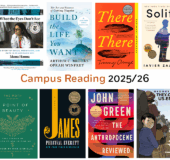
What Students Will Be Reading: Campus Common Reading Roundup, 2025-26

With the fall semester in full swing, colleges and universities around the country have announced their Common Reading books for the upcoming 2025-26 academic year. We’ve compiled a list of over 286 programs and their title selections from publicly available sources, which you can download here: First-Year Reading 2025-26. We will continue to update this

Read more

Register for the 2026 Penguin Random House First-Year Experience® Conference Author Events!

Penguin Random House Author Events at the 45th Annual First-Year Experience® Conference February 15-18, 2026 Seattle, Washington Hyatt Regency Seattle Click Here to RSVP A complimentary meal and a limited number of books will be available to attendees. Each event will also be followed by an author signing. Interested in hosting one of these authors at

Read more

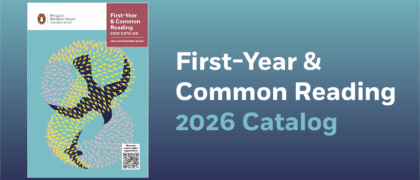
2026 Catalog for First-Year & Common Reading

We are delighted to present our new First-Year & Common Reading Catalog for 2026! From award-winning fiction, poetry, memoir, and biography to new books about the environment, current events, history, public health, science, social justice, student success, and technology, the titles presented in our common reading catalog will have students not only eagerly flipping through

Read more