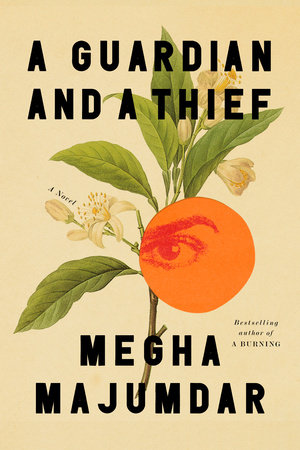
NATIONAL BESTSELLER • WINNER OF THE ANDREW CARNEGIE MEDAL FOR EXCELLENCE • Megha Majumdar’s electrifying new novel, following her acclaimed New York Times bestseller A Burning, is set in a near-future Kolkata, India in which two families seeking to protect their children must battle each other. A piercing and propulsive tour de force.

FINALIST FOR THE NATIONAL BOOK AWARD • LONGLISTED FOR THE WOMEN'S PRIZE FOR FICTION • OPRAH'S BOOK CLUB PICK

“Wondering if there’s a novel out there that gives Cormac McCarthy’s The Road a run for its money? Here you go.” —Stacy Schiff, author of Cleopatra: A Life


In a near-future Kolkata, Ma, her two-year-old daughter, and her elderly father are just days from leaving the collapsing city behind to join Ma’s husband in Ann Arbor, Michigan. After procuring long-awaited visas from the consulate, they pack their bags for the flight to America. But in the morning they awaken to discover that Ma’s purse, containing their treasured immigration documents, has been stolen.

Set over the course of one week, A Guardian and a Thief tells two stories: the story of Ma’s frantic search for the thief while keeping hunger at bay during a worsening food shortage; and the story of Boomba, the thief, whose desperation to care for his family drives him to commit a series of escalating crimes whose consequences he cannot fathom. With stunning control and command, Megha Majumdar paints a kaleidoscopic portrait of two families, each operating from a place of ferocious love and undefeated hope, each discovering how far they will go to secure their children’s future as they stave off encroaching catastrophe.

A masterful new work from one of the most exciting voices of her generation.
Day 1

A.

From the storeroom hidden under the stairs, Ma fetched a cup of rice and a sack of eggs speckled gray like the moon, then cooked, standing before the stove’s blue fire, her eye upon the window and its dusk, in which bats swooped and the neem tree shivered and a figure down on the road pedaled a bicycle, whistling, as if everything was all right.

Thief, thought Ma. Who else but a person who had chanced upon fresh vegetables or fruit would wander the city of Kolkata in this ruined year, the heat a hand clamped upon the mouth, the sun a pistol against one’s head, and recall a song? She watched to see what the thief would do. He pedaled past. But Ma saw a different reality shimmer into being, in which he leaned his bicycle against the wall, climbed the pipes like a toddy tapper, and appeared at her window. In that picture, the thief was a collector of local information, dutiful in his neighborhood eavesdropping, shrewd in following what he heard about the bins of onions and carrots, the sacks of lentils and rice, the bags of raisins and cashews hidden in the dark fist of the house, stolen by Ma from donations made to the shelter where she worked, while the city outside wept for a handful of something to eat.

There was—­in the label accepted by the region—­a shortage. In the year prior to this day, farmers across the region had fallen, their bodies running fevers in air that no longer cooled. In the croplands, among stilled machines, pests had traveled from acre to new acre, savage in their feeding of grains. In the west a drought had cleaved riverbeds and in the east salt water had tainted the paddy fields. In the city, those who walked to the neighborhood markets with umbrellas in their hands and wishful lists in their pockets, broad corners torn from the newspaper with writing in Bengali—­cabbage, ginger, lychees if they were good, ice cream, half loaf of bread—­found the roads alongside which the markets usually sat, its baskets and tarps invading, rickshaws and cars sounding their horns, slow shoppers inspecting the purple shine of eggplant and pressing guavas hard as hail, instead completely empty, nothing but some onion peel scattered at the edges where the pavement gave way to earth, where on most days goats and cows might have nudged the soil for something to eat. But those animals were gone too.

It had happened before. 1770, when crops failed and smallpox plagued the enfeebled. 1876, when drought struck the Deccan Plateau and the British continued to export what grain remained. 1943. Those black-­and-­white newspaper photos, in which people appeared as sunken eyes and twig-­thin limbs, facing a photographer who could do nothing for them, their fullness—­their love, their humor, their annoyance, their preference—­pared by the lens to reveal what remained, which was hunger.

The eggs clacked against one another in the turbulent water, the rice grew earthen and buttery, and Ma gathered in her hands a kitchen towel with which she would lift the pot lid before her, hot enough to pass for a weapon. But what would the thief have done had she, instead, glanced at him as if he were a returning member of the family, and told him with her mother’s authority to wash his hands and sit at the table? In fetching him a plate, who might she have become?

Ma shook her shoulders free of the distress. She did not need to put herself through such exercises anymore. She was leaving in seven days. Only seven days: It was close enough on the calendar to cast its glow over the whole week. Everything was in order. She had hired a new manager for the shelter; she had convened and concluded a final meeting with the board. The shelter, which had been her life for the past decade, would carry on without her, and she would begin a new life, perhaps at a new nonprofit, in Michigan. It was relief. It was even thrill.

After dinner on this day, she would go to the American consulate at the appointed time and collect the passports with climate visas inside, treasure beyond her greatest hope. And in seven days, she would be aboard a plane grading upward, its motion so beyond human comprehension that it would feel like stillness. Impossibly, the plane would speed through a night of sleep like sand blown in her eyes, toward a sunrise bright as iron poured upon the horizon, and finally, it would arrive in the United States. She knew plenty about America. Who didn’t, given Hollywood? It was a country of grocery stores as large as aircraft hangars, stocked with waxed fruit and misted vegetables and canned legumes from floor to ceiling. It was a country of breathable air and potable water, and, despite a history of attempts to cultivate a poorly educated electorate, functioning schools and tenacious thinkers. It was a country of encompassing hope, sustained by the people despite the peddlers of fear and pursuers of gain who wore the ill-­fitting costumes of political representation. It was a country of opportunity for her child.

Ma’s husband had moved six months ago for a research position on mosquito-­borne diseases at a laboratory in Ann Arbor. While settling in his new position, contributing to a healthy savings account, and searching diligently for an apartment suitable for all of them, he had also put the paperwork in place to bring his wife, child, and widowed father-­in-­law over. He had purchased the plane tickets and helped secure climate visas, a long process of supplication in both America and India before various bureaucrats who believed themselves gods. Before such interrogation, his standing as an urgently needed scientist had favored Ma and Dadu; the family’s middle-­class savings and ownership of the house had favored them; luck had favored them. All Ma needed to do was survive these seven days.

When Ma brought the rice and eggs to the dining table, Dadu was seated, writing a poem in his notebook, which was a child’s math book, pages turned ivory with age, grids holding not numbers but words written in the Bengali script that folded and straightened like caterpillars upon a stem. In this notebook he had written rhymes for Mishti, observations of the day, even an op-­ed that had been published a few years ago. As he wrote, he spoke: “Every morning, mother crow / Looked for rice, high and low—­”

Ma smiled. “Is this a new one?” She sat in her usual chair and put two eggs on a plate before him. “Eat.”

He smiled, too, showing teeth crooked as gravestones. With one hand he brushed Ma’s shoulder in thanks, the touch of his hand gentle, though the movement was clumsy. Then he capped his pen, tucked his chin, and regarded himself.

“I’m ready,” he said. While she had been in the kitchen, he had changed into outside clothes, ironed pants and ironed shirt, sleeves loose about his thin elbows, and rubbed a sheen of Vaseline on his fish-­scale skin. He had combed and parted his white hair. Dressing for the consulate was one way of asking for respect.

They ate.

In the living room, only a few paces from the dining table, were three suitcases, packed and stood upright, a Michigan address written on paper and sellotaped to each. Next to the suitcases, on the daybed, instead of the mound of pillows upon which Ma usually leaned to watch television, was a gathering of items that they could neither take nor bear to lose, items that awaited their fate in a land of indecision—­a potted cilantro, a pressure cooker, a costly vacuum cleaner, and, most delicate and difficult of all, a dinner set and tea set, purchased decades ago in China by Dadu’s grandparents. Other than these items, the room felt empty, its walls and shelves bare but for a few hardcovers fallen on their sides, surrendered to the termites that would eventually chew passageways through the paper. The entire house had been stripped. Objects that had rested in trunks and deep inside closets had been retrieved, dusted, evaluated. For so long these belongings had lived quietly in their spots, secured to Ma and Dadu by memory and the occasional cleaning, but now the objects were coldly separated from the people, and from the house itself, which seemed to bow its head in defeat, knowing its own burdensome immovability.

It was a good house, in a part of the city distant from the river, and on a nearly unnoticeable slope that nevertheless prevented rainwater pooling around it. In addition, Ma’s own mother—­Dadu’s wife—­had insisted on upgrades years ago, while she still had her vigor, and her salary, and now they benefited from her foresight. She had hired plumbers to set up a rainwater harvesting tank with multiple pipes and gutters feeding it, so that when the municipal water supply failed, the house still had plenty of water. She had hired electricians to install solar panels on the roof, and to connect the air-­conditioning to the solar panels, comprehending that cooling would soon be not a luxury but a matter of survival, so that their house remained cool while neighbors lay on their beds, fatigued, under fans that grunted and groaned, wearily completing their rotations. She had gotten these things done for the incompetents in her life, and then, Dadu said sometimes, with a small smile, dusted off her hands and made her exit.

Now Dadu pushed his chair back, brought the cilantro to the table, and gave it a little water from his drinking glass.

Then he called in the direction of the bedroom: “Mishti? O Mishti! It’s time to eat. Then we have to go out.”

Hearing her name, his granddaughter—­Ma’s daughter, two years old, glint of mischief in her eye—­emerged from the bedroom.

“What were you doing there?” said Dadu. “Were you doing Scooby stickers? Or were you spilling water again?”

Mishti grinned, showing tiny teeth with spaces between them, and wide gums.

“Come, eat,” said Dadu to the child, and Ma rose to put a towel on the spill.

In the bedroom, knees on the hard floor, Ma wiped from side to side and felt water soak through the thin cotton of her pants. When she found two damp stickers stuck to the floor, she scraped with her fingernail until they lifted, incompletely, then scrubbed the debris with the towel. Much of her life was a series of tedious acts like these, and yet the patience of performing them contained her love, less tender and often less tenderly shown than Dadu’s, but steadfast in its plain truth. From under the bed, she retrieved a picture book about airplanes and took it to the living room. “I found it, Mishti. Under the bed this whole time.”

Dadu took over the duty of reading, allowing Ma to return to the evening’s tasks. He turned to the child. “Soon—­do you remember?—­we will go on an airplane, with wings and windows and a nose just like this.”

Behind his cheer, Dadu, who had worked all his life managing distribution at a company that manufactured secateurs, or pruning shears—­always knowing, and accepting, that the arena of true feeling, for him, lay elsewhere, for example in the pursuit of trivial hobbies like writing poems—­was afraid of stepping onto that plane. He was too old to commence life in a new country. In America, he knew, he would be a diminished version of himself—­uncertain of social mores, unaccustomed to the accents, wary of car culture. There would be nobody in that place acquainted with his boyhood self. Was such an escape rescue or its own ruin?

While he read, he thumped the saltshaker on the table to loosen the clumps, and shook a little on his egg. He ate slowly, yolk rich as loam on his tongue, and held pieces out to Mishti, who pressed her lips together and shook her head. She had remembered her current craving.

“Flowerflower?” she asked hopefully.

“We don’t have any more cauliflower, Mishti. You ate all of it.”

“I want flowerflower, peese!”

“Eat this, then we all have to go to the consulate. We can’t be late.”

“Flowerflower,” she pleaded. “Peese! I say it nicely!”

“She has had no fresh vegetables,” allowed Ma, returning to the table. What she meant, and what Dadu understood, was that there had been no recent donations to the shelter of fresh vegetables. All that arrived these days—­and it had slowed to a worrisome trickle—­were packages of protein bars, in numbers so small that the removal of even a few would be noticeable. The shelter residents had begun to split bars between themselves, trading flavors, a game that grew subdued after a resident who had stolen some bars for reselling was caught and evicted—­not by the administrators but by his fellow residents.
  • AWARD | 2026
    Carnegie Medal
  • SHORTLIST | 2026
    Carol Shields Prize for Fiction
  • FINALIST | 2025
    Kirkus Prize for Fiction
  • FINALIST | 2025
    National Book Award Finalist
NAMED A NOTABLE BOOK OF THE YEAR: The New York Times, The New Yorker, The Washington Post, NPR, The Atlantic, Time, Chicago Tribune, New York Magazine, ELLE, Town & Country, Kirkus, Bookpage

“A true literary achievement. . . . Majumdar creates a tense and deeply compassionate portrait of desperation, fear and the combined selflessness and selfishness of parenthood. . . . Detail is the strongest thing in A Guardian and a Thief. It conveys the nuances of not only love but also wisdom . . . it also makes this novel, wrenching though it often is, a true joy to read.” ­—The New York Times Book Review

“[A Guardian and a Thief] is a perfect novel: 200 pages of tightly honed panic about life in a collapsing society. . . . The book’s simple structure feels reminiscent of a fairy tale, which helps account for the deep, visceral terror the story generates.” —The Washington Post

“A Guardian and a Thief is a literary gem with the pace of a thriller.” —USA Today

“Adroitly plotted. . . . Majumdar’s unstintingly graceful political novel has the grip of a nail-biter.” —The New Yorker

“A mesmerizing morality play that demonstrates how categories like 'victim' and 'thief' collapse under conditions of scarcity." —The Atlantic

“A Guardian and a Thief is an achievement. It deserves praise. It deserves study. It deserves to be read, and sat with, and thought about. . . . The craft of this novel is something approaching immaculate.” —Pittsburgh Post Gazette

“Tightly plotted and emotionally vivid.” —New York Magazine

“A piercing and empathetic examination of the moral complexities of survival and how love can blur the lines between right and wrong in the face of disaster. ” —TIME

“A beguilingly simple tale. A complicated morality play. A sensitive evocation of time. . . . [A Guardian and a Thief] is a contemporary classic.” —Minnesota Star Tribune

“Prescient. . . . Tightly plotted. . . . Majumdar’s novel makes chillingly real the law of the world.” —Foreign Policy

“[A Guardian and a Thief] is a tense, emotional thriller written with a poet’s knack for finding the right images to set your brain on fire.” —Esquire

“Wondering if there’s a novel out there that gives Cormac McCarthy’s The Road a run for its money? Here you go. [A Guardian and a Thief is] an indelible piece of writing, in equal parts dazzling and devastating.”—Stacy Schiff, author of Cleopatra: A Life

“Devastatingly powerful. . . . With this incredible story, Majumdar has given us something precious: truth.” —BookPage (starred review)

“An electrifying depiction of dignity and morality under siege. . . . With gorgeous writing and the pacing of a thriller, A Guardian and a Thief transports the reader to a world ravaged by drought, burning heat, and severe food scarcity. . . . The way Majumdar manages to connect all the storylines with a resolution that unfolds both globally and in one small living room is genius.” —Kirkus (starred review)

“Luminous. . . . Majumdar conjures a city at once deteriorating and resilient, where markets sell seaweed and synthetic fish, and the city’s 'remaining benevolent billionaire' lives on a heavily guarded man-made island in a widening river. . . . There’s no clear-cut villain here, just people attempting to survive and protect their own. Majumdar proves once again that she is a master of the moral dilemma.” —Publishers Weekly (starred review)

Majumdar brilliantly blurs right and wrong, ethics and legality. . . . [An] exquisitely wrenching novel.” —Booklist (starred review)
© Marco Giugliarelli
Megha Majumdar’s debut novel, the New York Times bestseller A Burning, was nominated for the National Book Award, the National Book Critics Circle’s John Leonard Prize, and the American Library Association’s Andrew Carnegie Medal. It was a TODAY show Read With Jenna Book Club Pick and a Barnes & Noble Discover Pick. In India, it won a Sahitya Akademi Yuva Puraskar. A Burning was named one of the best books of 2020 by media including The Washington Post, The New York Times, NPR, The Atlantic, Vogue, and TIME. Majumdar is the recipient of a Whiting Award, as well as of fellowships from the Civitella Ranieri and Hawthornden foundations. Born and raised in Kolkata, India, and educated at Harvard and Johns Hopkins, she now lives in New York. View titles by Megha Majumdar

Discussion Guide for A Guardian and a Thief: Oprah's Book Club

Provides questions, discussion topics, suggested reading lists, introductions and/or author Q&As, which are intended to enhance reading groups’ experiences.

(Please note: the guide displayed here is the most recently uploaded version; while unlikely, any page citation discrepancies between the guide and book is likely due to pagination differences between a book’s different formats.)

About

NATIONAL BESTSELLER • WINNER OF THE ANDREW CARNEGIE MEDAL FOR EXCELLENCE • Megha Majumdar’s electrifying new novel, following her acclaimed New York Times bestseller A Burning, is set in a near-future Kolkata, India in which two families seeking to protect their children must battle each other. A piercing and propulsive tour de force.

FINALIST FOR THE NATIONAL BOOK AWARD • LONGLISTED FOR THE WOMEN'S PRIZE FOR FICTION • OPRAH'S BOOK CLUB PICK

“Wondering if there’s a novel out there that gives Cormac McCarthy’s The Road a run for its money? Here you go.” —Stacy Schiff, author of Cleopatra: A Life


In a near-future Kolkata, Ma, her two-year-old daughter, and her elderly father are just days from leaving the collapsing city behind to join Ma’s husband in Ann Arbor, Michigan. After procuring long-awaited visas from the consulate, they pack their bags for the flight to America. But in the morning they awaken to discover that Ma’s purse, containing their treasured immigration documents, has been stolen.

Set over the course of one week, A Guardian and a Thief tells two stories: the story of Ma’s frantic search for the thief while keeping hunger at bay during a worsening food shortage; and the story of Boomba, the thief, whose desperation to care for his family drives him to commit a series of escalating crimes whose consequences he cannot fathom. With stunning control and command, Megha Majumdar paints a kaleidoscopic portrait of two families, each operating from a place of ferocious love and undefeated hope, each discovering how far they will go to secure their children’s future as they stave off encroaching catastrophe.

A masterful new work from one of the most exciting voices of her generation.

Excerpt

Day 1

A.

From the storeroom hidden under the stairs, Ma fetched a cup of rice and a sack of eggs speckled gray like the moon, then cooked, standing before the stove’s blue fire, her eye upon the window and its dusk, in which bats swooped and the neem tree shivered and a figure down on the road pedaled a bicycle, whistling, as if everything was all right.

Thief, thought Ma. Who else but a person who had chanced upon fresh vegetables or fruit would wander the city of Kolkata in this ruined year, the heat a hand clamped upon the mouth, the sun a pistol against one’s head, and recall a song? She watched to see what the thief would do. He pedaled past. But Ma saw a different reality shimmer into being, in which he leaned his bicycle against the wall, climbed the pipes like a toddy tapper, and appeared at her window. In that picture, the thief was a collector of local information, dutiful in his neighborhood eavesdropping, shrewd in following what he heard about the bins of onions and carrots, the sacks of lentils and rice, the bags of raisins and cashews hidden in the dark fist of the house, stolen by Ma from donations made to the shelter where she worked, while the city outside wept for a handful of something to eat.

There was—­in the label accepted by the region—­a shortage. In the year prior to this day, farmers across the region had fallen, their bodies running fevers in air that no longer cooled. In the croplands, among stilled machines, pests had traveled from acre to new acre, savage in their feeding of grains. In the west a drought had cleaved riverbeds and in the east salt water had tainted the paddy fields. In the city, those who walked to the neighborhood markets with umbrellas in their hands and wishful lists in their pockets, broad corners torn from the newspaper with writing in Bengali—­cabbage, ginger, lychees if they were good, ice cream, half loaf of bread—­found the roads alongside which the markets usually sat, its baskets and tarps invading, rickshaws and cars sounding their horns, slow shoppers inspecting the purple shine of eggplant and pressing guavas hard as hail, instead completely empty, nothing but some onion peel scattered at the edges where the pavement gave way to earth, where on most days goats and cows might have nudged the soil for something to eat. But those animals were gone too.

It had happened before. 1770, when crops failed and smallpox plagued the enfeebled. 1876, when drought struck the Deccan Plateau and the British continued to export what grain remained. 1943. Those black-­and-­white newspaper photos, in which people appeared as sunken eyes and twig-­thin limbs, facing a photographer who could do nothing for them, their fullness—­their love, their humor, their annoyance, their preference—­pared by the lens to reveal what remained, which was hunger.

The eggs clacked against one another in the turbulent water, the rice grew earthen and buttery, and Ma gathered in her hands a kitchen towel with which she would lift the pot lid before her, hot enough to pass for a weapon. But what would the thief have done had she, instead, glanced at him as if he were a returning member of the family, and told him with her mother’s authority to wash his hands and sit at the table? In fetching him a plate, who might she have become?

Ma shook her shoulders free of the distress. She did not need to put herself through such exercises anymore. She was leaving in seven days. Only seven days: It was close enough on the calendar to cast its glow over the whole week. Everything was in order. She had hired a new manager for the shelter; she had convened and concluded a final meeting with the board. The shelter, which had been her life for the past decade, would carry on without her, and she would begin a new life, perhaps at a new nonprofit, in Michigan. It was relief. It was even thrill.

After dinner on this day, she would go to the American consulate at the appointed time and collect the passports with climate visas inside, treasure beyond her greatest hope. And in seven days, she would be aboard a plane grading upward, its motion so beyond human comprehension that it would feel like stillness. Impossibly, the plane would speed through a night of sleep like sand blown in her eyes, toward a sunrise bright as iron poured upon the horizon, and finally, it would arrive in the United States. She knew plenty about America. Who didn’t, given Hollywood? It was a country of grocery stores as large as aircraft hangars, stocked with waxed fruit and misted vegetables and canned legumes from floor to ceiling. It was a country of breathable air and potable water, and, despite a history of attempts to cultivate a poorly educated electorate, functioning schools and tenacious thinkers. It was a country of encompassing hope, sustained by the people despite the peddlers of fear and pursuers of gain who wore the ill-­fitting costumes of political representation. It was a country of opportunity for her child.

Ma’s husband had moved six months ago for a research position on mosquito-­borne diseases at a laboratory in Ann Arbor. While settling in his new position, contributing to a healthy savings account, and searching diligently for an apartment suitable for all of them, he had also put the paperwork in place to bring his wife, child, and widowed father-­in-­law over. He had purchased the plane tickets and helped secure climate visas, a long process of supplication in both America and India before various bureaucrats who believed themselves gods. Before such interrogation, his standing as an urgently needed scientist had favored Ma and Dadu; the family’s middle-­class savings and ownership of the house had favored them; luck had favored them. All Ma needed to do was survive these seven days.

When Ma brought the rice and eggs to the dining table, Dadu was seated, writing a poem in his notebook, which was a child’s math book, pages turned ivory with age, grids holding not numbers but words written in the Bengali script that folded and straightened like caterpillars upon a stem. In this notebook he had written rhymes for Mishti, observations of the day, even an op-­ed that had been published a few years ago. As he wrote, he spoke: “Every morning, mother crow / Looked for rice, high and low—­”

Ma smiled. “Is this a new one?” She sat in her usual chair and put two eggs on a plate before him. “Eat.”

He smiled, too, showing teeth crooked as gravestones. With one hand he brushed Ma’s shoulder in thanks, the touch of his hand gentle, though the movement was clumsy. Then he capped his pen, tucked his chin, and regarded himself.

“I’m ready,” he said. While she had been in the kitchen, he had changed into outside clothes, ironed pants and ironed shirt, sleeves loose about his thin elbows, and rubbed a sheen of Vaseline on his fish-­scale skin. He had combed and parted his white hair. Dressing for the consulate was one way of asking for respect.

They ate.

In the living room, only a few paces from the dining table, were three suitcases, packed and stood upright, a Michigan address written on paper and sellotaped to each. Next to the suitcases, on the daybed, instead of the mound of pillows upon which Ma usually leaned to watch television, was a gathering of items that they could neither take nor bear to lose, items that awaited their fate in a land of indecision—­a potted cilantro, a pressure cooker, a costly vacuum cleaner, and, most delicate and difficult of all, a dinner set and tea set, purchased decades ago in China by Dadu’s grandparents. Other than these items, the room felt empty, its walls and shelves bare but for a few hardcovers fallen on their sides, surrendered to the termites that would eventually chew passageways through the paper. The entire house had been stripped. Objects that had rested in trunks and deep inside closets had been retrieved, dusted, evaluated. For so long these belongings had lived quietly in their spots, secured to Ma and Dadu by memory and the occasional cleaning, but now the objects were coldly separated from the people, and from the house itself, which seemed to bow its head in defeat, knowing its own burdensome immovability.

It was a good house, in a part of the city distant from the river, and on a nearly unnoticeable slope that nevertheless prevented rainwater pooling around it. In addition, Ma’s own mother—­Dadu’s wife—­had insisted on upgrades years ago, while she still had her vigor, and her salary, and now they benefited from her foresight. She had hired plumbers to set up a rainwater harvesting tank with multiple pipes and gutters feeding it, so that when the municipal water supply failed, the house still had plenty of water. She had hired electricians to install solar panels on the roof, and to connect the air-­conditioning to the solar panels, comprehending that cooling would soon be not a luxury but a matter of survival, so that their house remained cool while neighbors lay on their beds, fatigued, under fans that grunted and groaned, wearily completing their rotations. She had gotten these things done for the incompetents in her life, and then, Dadu said sometimes, with a small smile, dusted off her hands and made her exit.

Now Dadu pushed his chair back, brought the cilantro to the table, and gave it a little water from his drinking glass.

Then he called in the direction of the bedroom: “Mishti? O Mishti! It’s time to eat. Then we have to go out.”

Hearing her name, his granddaughter—­Ma’s daughter, two years old, glint of mischief in her eye—­emerged from the bedroom.

“What were you doing there?” said Dadu. “Were you doing Scooby stickers? Or were you spilling water again?”

Mishti grinned, showing tiny teeth with spaces between them, and wide gums.

“Come, eat,” said Dadu to the child, and Ma rose to put a towel on the spill.

In the bedroom, knees on the hard floor, Ma wiped from side to side and felt water soak through the thin cotton of her pants. When she found two damp stickers stuck to the floor, she scraped with her fingernail until they lifted, incompletely, then scrubbed the debris with the towel. Much of her life was a series of tedious acts like these, and yet the patience of performing them contained her love, less tender and often less tenderly shown than Dadu’s, but steadfast in its plain truth. From under the bed, she retrieved a picture book about airplanes and took it to the living room. “I found it, Mishti. Under the bed this whole time.”

Dadu took over the duty of reading, allowing Ma to return to the evening’s tasks. He turned to the child. “Soon—­do you remember?—­we will go on an airplane, with wings and windows and a nose just like this.”

Behind his cheer, Dadu, who had worked all his life managing distribution at a company that manufactured secateurs, or pruning shears—­always knowing, and accepting, that the arena of true feeling, for him, lay elsewhere, for example in the pursuit of trivial hobbies like writing poems—­was afraid of stepping onto that plane. He was too old to commence life in a new country. In America, he knew, he would be a diminished version of himself—­uncertain of social mores, unaccustomed to the accents, wary of car culture. There would be nobody in that place acquainted with his boyhood self. Was such an escape rescue or its own ruin?

While he read, he thumped the saltshaker on the table to loosen the clumps, and shook a little on his egg. He ate slowly, yolk rich as loam on his tongue, and held pieces out to Mishti, who pressed her lips together and shook her head. She had remembered her current craving.

“Flowerflower?” she asked hopefully.

“We don’t have any more cauliflower, Mishti. You ate all of it.”

“I want flowerflower, peese!”

“Eat this, then we all have to go to the consulate. We can’t be late.”

“Flowerflower,” she pleaded. “Peese! I say it nicely!”

“She has had no fresh vegetables,” allowed Ma, returning to the table. What she meant, and what Dadu understood, was that there had been no recent donations to the shelter of fresh vegetables. All that arrived these days—­and it had slowed to a worrisome trickle—­were packages of protein bars, in numbers so small that the removal of even a few would be noticeable. The shelter residents had begun to split bars between themselves, trading flavors, a game that grew subdued after a resident who had stolen some bars for reselling was caught and evicted—­not by the administrators but by his fellow residents.

Awards

  • AWARD | 2026
    Carnegie Medal
  • SHORTLIST | 2026
    Carol Shields Prize for Fiction
  • FINALIST | 2025
    Kirkus Prize for Fiction
  • FINALIST | 2025
    National Book Award Finalist

Praise

NAMED A NOTABLE BOOK OF THE YEAR: The New York Times, The New Yorker, The Washington Post, NPR, The Atlantic, Time, Chicago Tribune, New York Magazine, ELLE, Town & Country, Kirkus, Bookpage

“A true literary achievement. . . . Majumdar creates a tense and deeply compassionate portrait of desperation, fear and the combined selflessness and selfishness of parenthood. . . . Detail is the strongest thing in A Guardian and a Thief. It conveys the nuances of not only love but also wisdom . . . it also makes this novel, wrenching though it often is, a true joy to read.” ­—The New York Times Book Review

“[A Guardian and a Thief] is a perfect novel: 200 pages of tightly honed panic about life in a collapsing society. . . . The book’s simple structure feels reminiscent of a fairy tale, which helps account for the deep, visceral terror the story generates.” —The Washington Post

“A Guardian and a Thief is a literary gem with the pace of a thriller.” —USA Today

“Adroitly plotted. . . . Majumdar’s unstintingly graceful political novel has the grip of a nail-biter.” —The New Yorker

“A mesmerizing morality play that demonstrates how categories like 'victim' and 'thief' collapse under conditions of scarcity." —The Atlantic

“A Guardian and a Thief is an achievement. It deserves praise. It deserves study. It deserves to be read, and sat with, and thought about. . . . The craft of this novel is something approaching immaculate.” —Pittsburgh Post Gazette

“Tightly plotted and emotionally vivid.” —New York Magazine

“A piercing and empathetic examination of the moral complexities of survival and how love can blur the lines between right and wrong in the face of disaster. ” —TIME

“A beguilingly simple tale. A complicated morality play. A sensitive evocation of time. . . . [A Guardian and a Thief] is a contemporary classic.” —Minnesota Star Tribune

“Prescient. . . . Tightly plotted. . . . Majumdar’s novel makes chillingly real the law of the world.” —Foreign Policy

“[A Guardian and a Thief] is a tense, emotional thriller written with a poet’s knack for finding the right images to set your brain on fire.” —Esquire

“Wondering if there’s a novel out there that gives Cormac McCarthy’s The Road a run for its money? Here you go. [A Guardian and a Thief is] an indelible piece of writing, in equal parts dazzling and devastating.”—Stacy Schiff, author of Cleopatra: A Life

“Devastatingly powerful. . . . With this incredible story, Majumdar has given us something precious: truth.” —BookPage (starred review)

“An electrifying depiction of dignity and morality under siege. . . . With gorgeous writing and the pacing of a thriller, A Guardian and a Thief transports the reader to a world ravaged by drought, burning heat, and severe food scarcity. . . . The way Majumdar manages to connect all the storylines with a resolution that unfolds both globally and in one small living room is genius.” —Kirkus (starred review)

“Luminous. . . . Majumdar conjures a city at once deteriorating and resilient, where markets sell seaweed and synthetic fish, and the city’s 'remaining benevolent billionaire' lives on a heavily guarded man-made island in a widening river. . . . There’s no clear-cut villain here, just people attempting to survive and protect their own. Majumdar proves once again that she is a master of the moral dilemma.” —Publishers Weekly (starred review)

Majumdar brilliantly blurs right and wrong, ethics and legality. . . . [An] exquisitely wrenching novel.” —Booklist (starred review)

Author

© Marco Giugliarelli
Megha Majumdar’s debut novel, the New York Times bestseller A Burning, was nominated for the National Book Award, the National Book Critics Circle’s John Leonard Prize, and the American Library Association’s Andrew Carnegie Medal. It was a TODAY show Read With Jenna Book Club Pick and a Barnes & Noble Discover Pick. In India, it won a Sahitya Akademi Yuva Puraskar. A Burning was named one of the best books of 2020 by media including The Washington Post, The New York Times, NPR, The Atlantic, Vogue, and TIME. Majumdar is the recipient of a Whiting Award, as well as of fellowships from the Civitella Ranieri and Hawthornden foundations. Born and raised in Kolkata, India, and educated at Harvard and Johns Hopkins, she now lives in New York. View titles by Megha Majumdar

Guides

Discussion Guide for A Guardian and a Thief: Oprah's Book Club

Provides questions, discussion topics, suggested reading lists, introductions and/or author Q&As, which are intended to enhance reading groups’ experiences.

(Please note: the guide displayed here is the most recently uploaded version; while unlikely, any page citation discrepancies between the guide and book is likely due to pagination differences between a book’s different formats.)

What Students Will Be Reading: Campus Common Reading Roundup, 2026–27

With the fall semester in full swing, colleges and universities across the country have announced their Common Reading books for the 2026–27 academic year. We’ve compiled a list of over 250 programs and their title selections, detailed below. We will continue to update this listing to provide the most comprehensive record of programs available anywhere

Read more

2027 Catalog for First-Year & Common Reading

We are delighted to present our new First-Year & Common Reading Catalog for 2027! From award-winning fiction, poetry, memoir, and biography to new books about the environment, current events, history, public health, science, social justice, student success, and technology, the titles presented in our common reading catalog will have students not only eagerly flipping through

Read more

Videos from the 2026 First-Year Experience® Conference are now available

We’re pleased to share videos from the 2026 First-Year Experience® Conference. Whether you weren’t able to join us at the conference or would simply like to hear the talks again, please take a moment to view the clips below.   Penguin Random House Author Breakfast Monday, February 17th, 7:15 – 8:45 am PST   This

Read more