Chapter One
Trey
In time there would be a big company. And in time there would be software programs millions of lines long at the core of billions of computers used around the world. There would be riches and rivals and constant worry about how to stay at the forefront of a technological revolution.
Before all of that, there was a pack of cards and a single goal: beat my grandmother.
In my family there was no faster way to win favor than to be good at games, especially card games. If you were confident in Rummy or Bridge or Canasta, you had our respect, which made my maternal grandmother, Adelle Thompson, a household legend. “Gami’s the best at cards,” was something I heard a lot as a kid.
Gami had grown up in rural Washington, in the railroad town of Enumclaw. It’s just twenty-five miles from Seattle but it was a world away in 1902, the year she was born. Her dad worked as a railroad telegraph operator and her mother, Ida Thompson—we called her Lala—would eventually earn a modest income by baking cakes and selling war bonds at the local lumber mill. Lala also played a lot of bridge. Her partners and opponents were the society people in town, the wives of bankers and the owner of the mill. These people may have had more money or higher social standing, but Lala leveled some of the difference by handily beating them at cards. This talent got passed on to Gami and to a degree my mom, her only child.
My initiation into this family culture started early. When I was still in diapers, Lala started calling me “Trey,” the card player’s lingo for three. It was a play on the fact that I was the family’s third living Bill Gates, after my dad and grandfather. (I am actually number four, but my dad chose to go by “junior” and in turn I got called Bill Gates III.) Gami started me off at age five with Go Fish. In the coming years we would play thousands of hands of cards. We played for fun, and we played to tease each other and pass the time. But my grandmother also played to win—and she always did.
Her mastery fascinated me back then. How did she get so good? Was she born that way? She was religious, so maybe it was a gift from above? For a long time, I didn’t have an answer. All I knew was that every time we played, she won. No matter the game. No matter how hard I tried.
When Christian Science rapidly expanded in the West Coast in the early 1900s, both my mother’s and father’s families became devout followers. I think my mother’s parents drew strength from Christian Science, embracing its belief that a person’s true identity is found in the spiritual and not the material. They were strict adherents. Because Christian Scientists don’t track chronological age, Gami never celebrated her birthday, never disclosed her age or even the year she was born. Despite her own convictions, Gami never imposed her views on others. My mom didn’t follow the faith, nor did our family. Gami never tried to persuade us to do otherwise.
Her faith probably had a role in shaping her into an extremely principled person. Even back then, I could grasp that Gami followed a strict personal code of fairness and justice and integrity. A life well lived meant living simply, giving your time and money to others, and, most of all, using your brain—staying engaged with the world. She never lost her temper, never gossiped, or criticized. She was incapable of guile. Often she was the smartest person in the room, but she was careful to let others shine. She was basically a shy person, but she had an inner confidence that presented as a Zen-like calm.
It was right before my fifth birthday that my grandfather, J. W. Maxwell Jr., died of cancer. He was only fifty-nine years old. Following his Christian Science beliefs, he had declined modern medical interventions. His last years were filled with pain, and Gami suffered as his caregiver. I learned later that my grandfather believed his sickness was somehow the result of something Gami had done, some unknown sin in the eyes of God who was now punishing him. Still, she stoically stood by his side, supporting him until the end. One of my sharpest memories from childhood was how my parents wouldn’t let me attend his funeral. I was hardly aware of what was going on, other than the fact that my mother, father, and older sister got to see him off while I stayed behind with a babysitter. A year later, my great-grandmother Lala died while visiting Gami at her home.
From that point on, Gami channeled all her love and attention into me and my older sister, Kristi—and later my sister Libby. She would be a constant presence in our young lives and have a profound effect on who we would become. She read to me before I could hold a book and for years after, covering the classics like The Wind in the Willows, The Adventures of Tom Sawyer, and Charlotte’s Web. After my grandfather died, Gami started to teach me to read for myself, helping me sound out the words in The Nine Friendly Dogs, It’s a Lovely Day, and other books in our house. When we had worked through all of those, she drove me to the Northeast Seattle Library to load up on more books. I was aware that she read a lot and seemed to know something about everything.
My grandparents had built a house in the upscale Seattle neighborhood of Windermere big enough to accommodate grandkids and family gatherings. Gami continued to live there after my grandfather died. On some weekends Kristi and I would stay over, alternating who got the privilege of sleeping in her room. The other one slept in a nearby bedroom where everything from walls to curtains was pale blue. Light from the street and passing cars painted eerie shadows in that blue room. I got scared sleeping there and was always glad when it was my turn to stay in Gami’s room.
Those weekend visits were special. Her house was just a couple of miles from ours, but spending time there felt like a vacation. She had a pool and compact mini golf course we’d play in the side yard, set up by my grandfather. She also allowed us the treat of television—a tightly controlled substance at our own house. Gami was up for anything; thanks to her, my sisters and I became avid game players who made anything—Monopoly, Risk, Concentration—into a competitive sport. We’d buy two copies of a jigsaw puzzle so we could race to see who finished first. But we knew her preference. Most nights after dinner, she dealt the cards and then proceeded to kick our butts.
I was about eight when I got my first glimmer of how she did it. I still remember the day: I’m sitting across from my grandmother at the dining room table, my older sister, Kristi, next to me. The room has one of those huge old wooden radios that even then was a relic of the past. Along another wall is a big cabinet where she stored the special dishes that we used every Sunday for dinner.
It’s quiet, except for the slapping of cards on the table, a frenzy of drawing and matching cards in rapid fire. We’re playing Pounce, a fast-paced, group form of Solitaire. A serial Pounce winner can keep track of what’s in their hand, what cards are showing in all the players’ individual piles, and what’s in the communal piles on the table. It rewards a strong working memory and the pattern-matching ability to instantly recognize how a card that comes up on the table fits into what you hold in your hand. But I don’t know any of this. All I know is that whatever it is that’s needed to turn luck in your favor, Gami has it.
I am staring at my cards, my head racing to find matches. Then I hear Gami say: “Your six card plays.” And then, “Your nine card plays.” She’s coaching my sister and me while also playing her own hand. She can’t see that we’re holding those cards, but she knows—and it’s not magic. How is she doing it? To anyone who plays cards, this is basic stuff. The more closely you can track your opponent’s hand, the better your chances of winning. Still, to me at that age, it’s a revelation. I see for the first time that for all the mystery and luck in a game of cards, there are things that I can learn to increase my chances of winning. I realize Gami isn’t just lucky or talented. She’s trained her brain. And I can too.
From that time on, I would sit down to a game of cards with an awareness that each hand dealt offered the chance to learn—if only I would take it. She knew it too. That didn’t mean she made the path easy. She could have sat me down and walked me through the do’s and don’ts, the strategies and tactics of various games. That wasn’t Gami’s way. She wasn’t didactic. She led by example. So we played and played.
We played Pounce, Gin Rummy, Hearts, and my favorite, Sevens. We played her favorite, a complicated form of Gin she called Coast Guard Rummy. We played a little Bridge. We played our way through a volume of Hoyle’s, front to back, dealing games popular and not—even Pinochle.
All the while, I studied her. In computer science there’s a thing called a state machine, a part of a program that receives an input and, based on the state of a set of conditions, takes the optimal action. My grandmother had a finely tuned state machine for cards; her mental algorithm methodically worked through probabilities, decision trees, and game theory. I couldn’t have articulated these concepts, but slowly I started to intuit them. I noticed that even at unique moments in a game—a combination of possible moves and odds she probably had never seen before—she usually made the optimal move. If she lost a good card at some point, later in the game I’d see she had sacrificed it for a reason: to set herself up for a win down the road.
We played and played and I lost and lost. But I was watching, and improving. All along, Gami continued to gently encourage me. “Think smart, Trey. Think smart,” she’d say as I weighed my next move. Implicit was the idea that if I used my brain, stayed focused, I could figure out the right card to play. I could win.
One day I did.
There was no fanfare. No grand prize. No high fives. I don’t even remember what game we were playing the first time I won more games in a day than she did. I do know my grandmother was pleased. I’m pretty sure she smiled, an acknowledgment that I was growing.
Eventually—it took about five years—I was winning consistently. By that point I was almost a teenager, naturally competitive. I enjoyed the mental wrestling, as well as the deeply satisfying feeling you get from learning a new skill. Card playing taught me that no matter how complex or even mysterious something seems, you often can figure it out. The world can be understood.
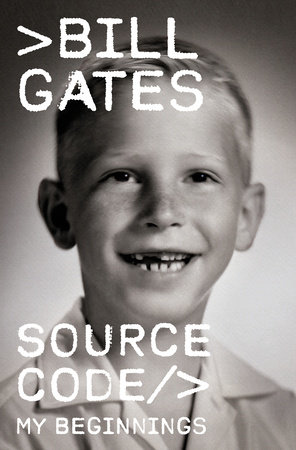
I was born on October 28, 1955, the second of three kids. Kristi, born in 1954, was twenty-one months older; my sister Libby wouldn’t appear on the scene for nearly another decade. As a baby, I was dubbed “Happy Boy” for the wide grin I seemed to always display. It wasn’t that I didn’t cry, but the joy I apparently felt seemed to override all other emotions. My other notable early trait might be described as excess energy. I rocked. At first on a rubber hobby horse, for hours on hours. And as I grew older, I kept it up without the horse, rocking while seated, while standing, anytime I got to really thinking about something. Rocking was like a metronome for my brain. It still is.
Early on, my parents knew that the rhythm of my mind was different from that of other kids. Kristi, for one, did what she was told, played easily with other kids, and from the start got great grades. I did none of those things. My mother worried about me and warned my preschool teachers at Acorn Academy what to expect. At the end of my first year, the director of the school wrote: “His mother had prepared us for him for she seemed to feel that he was a great contrast to his sister. We heartily concurred with her in this conclusion, for he seemed determined to impress us with his complete lack of concern for any phase of school life. He did not know or care to know how to cut, put on his own coat, and was completely happy thus.” (It’s funny now that one of Kristi’s earliest memories of me includes the frustration of always being the one who had to wrestle me into my coat and then get me to lie on the floor so I was still enough for her to zip it up.)
In my second year at Acorn Academy, I arrived “a newly aggressive, rebellious child,” a four-year-old who liked singing solo and taking imaginary trips. I scuffled with other kids, and was “frustrated and unhappy much of the time,” the director reported. Fortunately, my teachers were heartened by my long-term plans: “We feel very accepted by him since he is including us as passengers on his proposed moon shot,” they wrote. (I was ahead of Kennedy by a few years.)
What educators and my parents noted at an early age were hints of what would come. I channeled the same intensity that drew me into solving the puzzle of Gami’s card skill into anything that interested me—and nothing that didn’t. The things that interested me included reading, math, and being alone in my own head. The things that didn’t were the daily rituals of life and school, handwriting, art, and sports. Also, mostly everything my mother told me to do.
My parents’ struggle with their hyperkinetic, brainy, and often contrarian, tempestuous son would absorb much of their energy as I grew up and would indelibly shape our family. As I’ve grown older, I better understand just how instrumental they were in helping chart my unconventional path to adulthood.
My father was known as a gentle giant, six-feet-seven-inches tall with a calm politeness you might not expect from a man who was often the biggest guy in the room. He had a direct, purposeful way of dealing with people that defined him and suited his career as a lawyer advising businesses and boards (and later as the first head of our philanthropic foundation). Though polite, he wasn’t shy to ask for what he wanted. As a college student, what he wanted was a dance partner.
Copyright © 2025 by Bill Gates. All rights reserved. No part of this excerpt may be reproduced or reprinted without permission in writing from the publisher.